
Carilion's Dr. Rob McNamara Contributes to NIH-Funded
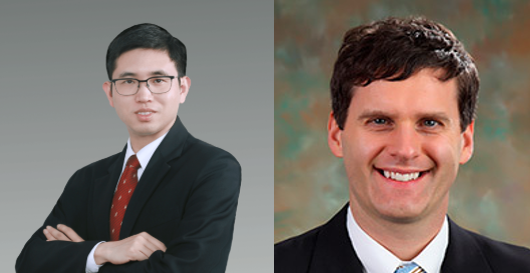
Congratulations to Dr. Rob McNamara, faculty member in the Department of Psychiatry and Behavioral Medicine, on his role as Co-Investigator on a newly funded NIH R21 grant led by Dr. Huaiyang Zhong, Principal Investigator.
The project, "Advancing Chronic Pain Care in Rural Seniors: Machine Learning and Natural Language Processing to Improve Understanding, Assessment, and Comorbidity Risk Prediction," will explore innovative ways to improve the assessment and management of chronic pain among older adults living in rural communities.
By leveraging machine learning, natural language processing (NLP), and advanced predictive models, the research team aims to develop tools that provide a more comprehensive understanding of chronic pain while identifying individuals at increased risk for related conditions, such as depression. These innovations have the potential to support earlier interventions, improve clinical decision-making, and expand access to personalized care for underserved populations.
Dr. McNamara brings more than 15 years of experience in prevention, clinical intervention, and implementation research. His expertise as both a licensed clinical psychologist and researcher will help ensure that the project's innovative methodologies remain grounded in evidence-based practice and are applicable to real-world clinical settings.
The multidisciplinary team also includes Drs. Xuan Wang (VT), Jyoti Savla (VT), and Kwok-Leung Tsui (UT-Arlington), and whose expertise spans clinical psychology, artificial intelligence, aging, healthcare analytics, and biostatistics. The project is further strengthened by an interdisciplinary advisory board of Drs. Alex Hanlon (VT BHDS), Anita Kablinger (VTCSOM), Donald Penzien (Wake Forest), Margaret Rukstatlis (VTCSOM), Elizabeth Russo-Stringer (VTCSOM), and Bob Trestman (VTCSOM), who bring combined expertise in psychiatry, chronic pain, addiction medicine, clinical trials, and healthcare data science.
Congratulations to Dr. Zhong, Dr. McNamara, and the entire research team on this significant achievement and their commitment to advancing innovative research that improves the health of the communities we serve.