Babies can’t regulate their body temperature as well as adults, so they depend on you to help keep them comfy. But figuring out how to dress your baby can be confusing, especially when the weather changes or you’re worried about them being too hot or cold at night.
Jill Lucas, Carilion Children's Safe Kids coordinator, shares these tips for keeping your little one safe and comfortable.
How to dress your baby for sleep
Sleep clothing matters. The goal is to keep your baby comfortable without overheating. How you dress your baby will depend on the temperature of the room where they’re sleeping. Follow these general guidelines:
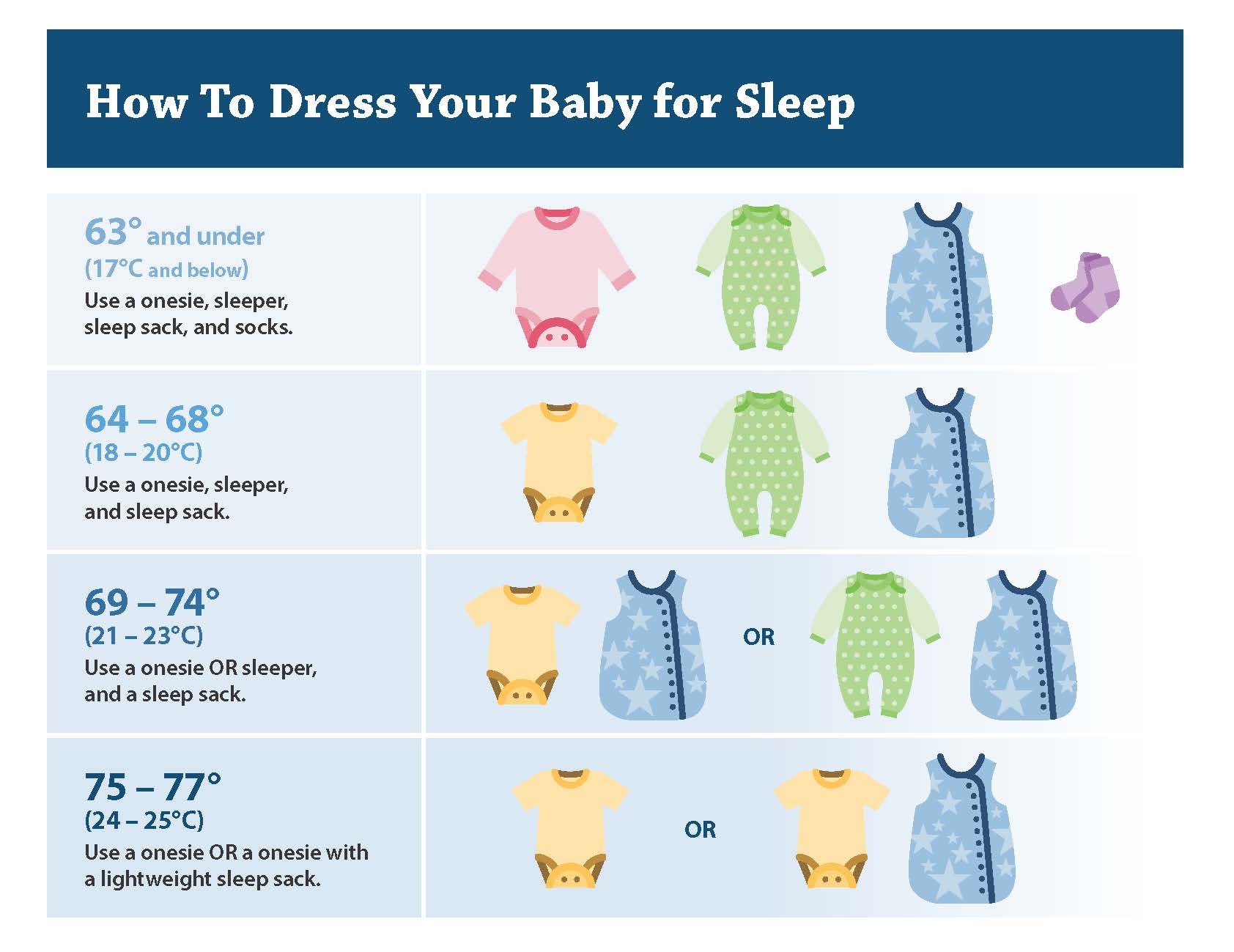
Tip: To make those nighttime diaper changes easier, look for sleepers that have zippers instead of snaps or buttons!
Overheating can increase the risk of SIDS, so it’s important to keep the room comfortable and not overdress your baby. The ideal room temperature is 68 – 72°F.
Never cover your baby with a loose blanket during sleep to prevent the risk of suffocation and overheating. Always follow infant sleep guidelines to help keep your baby safe.
How to dress your baby for the weather
If you’re going to be outdoors, it’s important to check the forecasted temperature and dress your baby accordingly. Follow these general guidelines:
![How to dress your baby by outdoor temperature. 80 – 70°F: Keep clothing light and protect from direct sun; 60 – 50°F: Add a light outer layer for cooler weather; 40 – 30°F: Layer with warm outerwear for cold temperatures; 20°F and below: Provide full coverage and protect hands and feet.]](/sites/default/files/inline-images/how%20to%20dress%20your%20baby%20for%20the%20weather.jpg)
Dressing your baby in hot weather
When it’s warm outside (75°F or over), less is usually more.
- Stick with lightweight clothing: Choose soft, breathable fabrics like cotton. These help your baby stay cool and prevent overheating.
- Keep layers minimal: On very hot days, a diaper and a sleeveless onesie may be all your baby needs. If you’re going into air conditioning, bring a light extra layer just in case.
- Don’t forget sun protection: The American Academy of Pediatrics recommends keeping babies younger than 6 months out of direct sunlight. Once they’re old enough, use sunscreen with SPF 15 or higher and reapply every 2 hours. A hat and sun shirt can also help protect your baby.
Dressing your baby in rainy or windy weather
Rain and wind can make babies cold faster than you might expect.
- Keep your baby dry: Wet clothes can quickly lower your baby’s body temperature. Use outer layers to keep them dry and change clothes as soon as possible if they do get damp.
- Watch out for wind: Too much wind exposure can also lower body temperature. Make sure your baby is dressed in enough layers and shielded from strong wind.
Dressing your baby in cold weather
When it’s cold, layering is key.
- Use the “1 extra layer” rule: A good guideline is to dress your baby in 1 more layer than you’re wearing.
- Cover their head and hands: Hats and mittens help prevent heat loss. Just remember to remove them once you’re indoors so your baby doesn’t overheat.
- Skip bulky coats in the car seat: Thick coats can prevent the car seat harness from fitting properly. Instead, use thinner layers and place a blanket over your baby after they’re buckled in.
How to tell if your baby is too hot or too cold
Instead of checking their hands or feet, feel your baby’s chest or back.
Your baby may be too hot if they:
- Are sweating
- Feel hot to the touch
- Have flushed cheeks
Your baby may be too cold if they:
- Feel cool on their chest or back
- Seem fussy or uncomfortable
If you have questions or concerns, reach out to your child’s pediatrician.