Advanced Lung Testing and Imaging
Advanced Lung Testing and Imaging
Advanced Lung Testing and Imaging
If you have a serious or long-term lung condition, you may need special tests to help your care team understand what's happening.
At Carilion Clinic, our lung doctors use the newest tools to diagnose your condition, watch for changes over time, and guide the care that's right for you.
Our lung experts are known for their skill in advanced lung testing. These tests do more than a regular exam. They let us look closely inside your airways, take small tissue samples, and spot even tiny changes in your lungs.
With services like robotic bronchoscopy, cryobiopsy, and other advanced tests, patients across the region come to Carilion for answers and care they may not find anywhere else.
If you have a serious or long-term lung condition, you may need special tests to help your care team understand what's happening.
At Carilion Clinic, our lung doctors use the newest tools to diagnose your condition, watch for changes over time, and guide the care that's right for you.
Our lung experts are known for their skill in advanced lung testing. These tests do more than a regular exam. They let us look closely inside your airways, take small tissue samples, and spot even tiny changes in your lungs.
With services like robotic bronchoscopy, cryobiopsy, and other advanced tests, patients across the region come to Carilion for answers and care they may not find anywhere else.
Advanced lung testing and imaging means using special tools that go beyond routine exams or X-rays. These tests let us see deep inside your airways, take small tissue samples, and create detailed images that show even the smallest changes in your lungs.
At Carilion, we use these tools to diagnose lung conditions, guide treatment, and track your health over time. Some tests let us look directly inside your airways, others allow us to collect samples, and some provide advanced images to help us find problems early.
Together, they give our lung specialists the clearest picture of your lung health and the best path forward for your care.
Bronchoscopy procedures
These tests use a thin tube with a camera, called a bronchoscope, to look inside your lungs and airways.
- Routine bronchoscopy: Doctors look at your air passages with a small camera on a flexible tube. The images show up on a video screen.
- Robotic-assisted bronchoscopy: Like a routine bronchoscopy, but doctors guide the tube with great precision using a controller and 3-D computer images. This lets us reach areas of the lung that are hard to access with traditional bronchoscopy.
Tissue sampling
Sometimes your doctor needs to take samples of tissue or fluid to learn more about your condition.
- Transbronchial needle aspiration: The doctor passes a thin needle through the airway to collect cells and fluid for testing. This helps diagnose and stage lung cancer and other lung diseases.
- Transbronchial needle core biopsy: A wider, hollow needle removes a larger tissue sample when we need more detail.
- Cryobiopsy: Compressed gas freezes a small area of lung tissue in seconds, and we remove the frozen sample for testing.
Advanced imaging
Special imaging tools give doctors a closer look at your lungs and can reveal changes that we may not see with regular scopes.
- Narrow band imaging: Special light waves highlight blood vessels in the airway to find areas that may be precancerous.
- Endobronchial ultrasound: An ultrasound probe on the bronchoscope helps diagnose inflammation, infections, and cancer.
What Is Advanced Lung Testing and Imaging?
Advanced lung testing and imaging means using special tools that go beyond routine exams or X-rays. These tests let us see deep inside your airways, take small tissue samples, and create detailed images that show even the smallest changes in your lungs.
At Carilion, we use these tools to diagnose lung conditions, guide treatment, and track your health over time. Some tests let us look directly inside your airways, others allow us to collect samples, and some provide advanced images to help us find problems early.
Together, they give our lung specialists the clearest picture of your lung health and the best path forward for your care.
Bronchoscopy procedures
These tests use a thin tube with a camera, called a bronchoscope, to look inside your lungs and airways.
- Routine bronchoscopy: Doctors look at your air passages with a small camera on a flexible tube. The images show up on a video screen.
- Robotic-assisted bronchoscopy: Like a routine bronchoscopy, but doctors guide the tube with great precision using a controller and 3-D computer images. This lets us reach areas of the lung that are hard to access with traditional bronchoscopy.
Tissue sampling
Sometimes your doctor needs to take samples of tissue or fluid to learn more about your condition.
- Transbronchial needle aspiration: The doctor passes a thin needle through the airway to collect cells and fluid for testing. This helps diagnose and stage lung cancer and other lung diseases.
- Transbronchial needle core biopsy: A wider, hollow needle removes a larger tissue sample when we need more detail.
- Cryobiopsy: Compressed gas freezes a small area of lung tissue in seconds, and we remove the frozen sample for testing.
Advanced imaging
Special imaging tools give doctors a closer look at your lungs and can reveal changes that we may not see with regular scopes.
- Narrow band imaging: Special light waves highlight blood vessels in the airway to find areas that may be precancerous.
- Endobronchial ultrasound: An ultrasound probe on the bronchoscope helps diagnose inflammation, infections, and cancer.
You might need advanced lung testing or imaging if you have:
- Pulmonary nodules: Small dense masses in the lungs that are usually benign but can be cancerous and are found on a lung cancer screening or CT scan.
- Confirmed or suspected lung cancer: Airway tumors may be malignant or benign.
- Interstitial lung disease (ILD): Umbrella term for different diseases that cause scarring in the lungs, often from exposure to hazardous materials.
- Sarcoidosis: An autoimmune disease that can increase the risk of ILD.
- Chronic obstructive pulmonary disease (COPD): Includes chronic bronchitis and emphysema. These chronic lung diseases make it hard to breathe.
- Enlarged lymph nodes: When lymph nodes between and around the lungs grow. It can signal the presence of COPD, cancer, or other lung conditions.
- Bronchiectasis: A long-term lung disease where the airway walls get wide and thick from inflammation and infection.
Is Advanced Lung Testing and Imaging Right for Me?
You might need advanced lung testing or imaging if you have:
- Pulmonary nodules: Small dense masses in the lungs that are usually benign but can be cancerous and are found on a lung cancer screening or CT scan.
- Confirmed or suspected lung cancer: Airway tumors may be malignant or benign.
- Interstitial lung disease (ILD): Umbrella term for different diseases that cause scarring in the lungs, often from exposure to hazardous materials.
- Sarcoidosis: An autoimmune disease that can increase the risk of ILD.
- Chronic obstructive pulmonary disease (COPD): Includes chronic bronchitis and emphysema. These chronic lung diseases make it hard to breathe.
- Enlarged lymph nodes: When lymph nodes between and around the lungs grow. It can signal the presence of COPD, cancer, or other lung conditions.
- Bronchiectasis: A long-term lung disease where the airway walls get wide and thick from inflammation and infection.
The tests and imaging we run depends on your symptoms and medical history.
In general, we begin with the least invasive testing. If we don’t get the answers we need, we’ll move on to more advanced testing and imaging.
When you see a pulmonologist at Carilion, we start with a physical exam and a detailed medical history. Expect to answer questions like:
- Did any family members have COPD, lung cancer, or other lung diseases?
- Do you smoke or did you ever smoke? For how long? Were you exposed to secondhand smoke?
- What symptoms do you have and when did they begin? Do they get worse with a change of season, weather, or other triggers?
The next step to diagnosis may be a chest X-ray, ultrasound, or CT scan. These tests produce detailed images of your heart, lungs, and airways. We may suggest a lung function test to see how well your lungs are working.
If we need more information, we may suggest a bronchoscopy so doctors can get a closer look at problem areas in the lungs. To rule out cancer, we may do a biopsy to test the tissue in a pulmonary nodule. Your doctor will talk to you about preparing for and recovering from these tests.
We perform hundreds of lung tests every year. But every lung procedure carries some risks. If you’re coughing up blood or have severe shortness of breath, you should call 911 or head to the nearest emergency room.
What Should I Expect?
The tests and imaging we run depends on your symptoms and medical history.
In general, we begin with the least invasive testing. If we don’t get the answers we need, we’ll move on to more advanced testing and imaging.
When you see a pulmonologist at Carilion, we start with a physical exam and a detailed medical history. Expect to answer questions like:
- Did any family members have COPD, lung cancer, or other lung diseases?
- Do you smoke or did you ever smoke? For how long? Were you exposed to secondhand smoke?
- What symptoms do you have and when did they begin? Do they get worse with a change of season, weather, or other triggers?
The next step to diagnosis may be a chest X-ray, ultrasound, or CT scan. These tests produce detailed images of your heart, lungs, and airways. We may suggest a lung function test to see how well your lungs are working.
If we need more information, we may suggest a bronchoscopy so doctors can get a closer look at problem areas in the lungs. To rule out cancer, we may do a biopsy to test the tissue in a pulmonary nodule. Your doctor will talk to you about preparing for and recovering from these tests.
We perform hundreds of lung tests every year. But every lung procedure carries some risks. If you’re coughing up blood or have severe shortness of breath, you should call 911 or head to the nearest emergency room.
At Carilion, our pulmonary specialists are experts at diagnosing and treating a wide range of lung diseases. Our goal is to get you breathing better and back to living your active life.

Latest therapies
We research new medicines and cutting-edge therapies for lung diseases. You may even have the opportunity to take part in a clinical trial for new treatments.

National recognition
The American Thoracic Society accredits our pulmonary labs. This means our testing meets the highest national standards. And, U.S. News & World Report ranks Carilion Roanoke Memorial Hospital as “high performing” in COPD.

Tailored care
Our pulmonary hypertension program offers a plan tailored to your needs instead of a one-size-fits-all approach. We combine lifestyle changes with medicine. Your treatment plan may include oral, inhaled, or intravenous medicine.
Why Choose Carilion Clinic?
At Carilion, our pulmonary specialists are experts at diagnosing and treating a wide range of lung diseases. Our goal is to get you breathing better and back to living your active life.
Health and Wellness

Childhood Asthma: Know the Signs and Symptoms
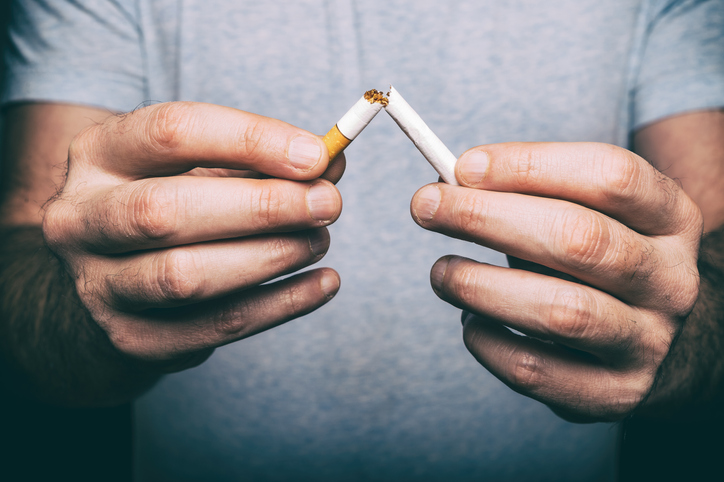
Stop Smoking, Start Thriving

Pneumonia: What You Need to Know
Get Care at Carilion Clinic
Your path to better health starts here. Explore comprehensive care options and find the support you need for every step of your wellness journey.
Get Care at Carilion Clinic
Your path to better health starts here. Explore comprehensive care options and find the support you need for every step of your wellness journey.
Get Care at Carilion Clinic
Your path to better health starts here. Explore comprehensive care options and find the support you need for every step of your wellness journey.
Get Care at Carilion Clinic
Your path to better health starts here. Explore comprehensive care options and find the support you need for every step of your wellness journey.