Flow Sensor for Ventriculoperitoneal (VP) Shunt
The focus of this study relates to blockages in ventriculoperitoneal (VP) shunts implanted in patients with hydrocephalus using a new VP shunt device that supplements the existing device to provide regular or continuous flow rate feedback to patients and their medical team. The feedback will i...
About
Hydrocephalus is an excess buildup of cerebrospinal fluid (CSF) within the brain, specifically in the ventricles that lie deep within the brain. This fluid causes the ventricles to expand, which puts pressure on the brain. Hydrocephalus can develop at any age, but is found to be more common in infants and adults age 60 and older.
Typical symptoms of hydrocephalus include headache, blurred vision, difficulty walking, neck pain and confusion. Most patients are recommended to have a ventriculoperitoneal (VP) shunt implanted, which funnels CSF from the ventricles to the abdomen, varying in destination from patient to patient. This device is traditionally an effective solution to hydrocephalus, but it has primary issues around infections and blockages.
The focus of this study relates to blockages, specifically measuring flow rate in the shunt. Monitoring of flow rate allows for more proactive adjustments to the valves and earlier notifications of blockages. We have developed a new VP shunt device that provides flow rate feedback to patients and their medical teams on a regular or continuous basis, depending on the needs of the patient. The new device is supplemental to patients' existing VP shunt device and is located in series with the drain tubing. The clinician can then use the flow information to adjust the flow rate in the patient’s existing device.
Protocol Description
In this study, a device will be placed in the external drain line (catheter) of patients that need a temporary shunt placed in their head. This device will be monitored and data recorded via hooking up the electrodes to a device called the Arduino (a small data recording device). Multiple data points will be collected about the new medical device performance, stability, flow capability, durability, etc., as the design is adjusted for the best possible version of a new medical device to be ultimately created and used in the field.
Additionally, the CSF will be tested by collection via the catheter port and testing for potential ion presence to determine its impact on the device, as well as chart review for labs and demographics that may impact the new device.
Eligibility Criteria
Inclusion Criteria
- Age 18-80
- Inpatients with need for an EVD due to excessive buildup of CSF in ventricles
Exclusion Criteria
- Age <18 or > 80
- Diagnosis of no excess CSF build up in ventricles
Primary Investigator
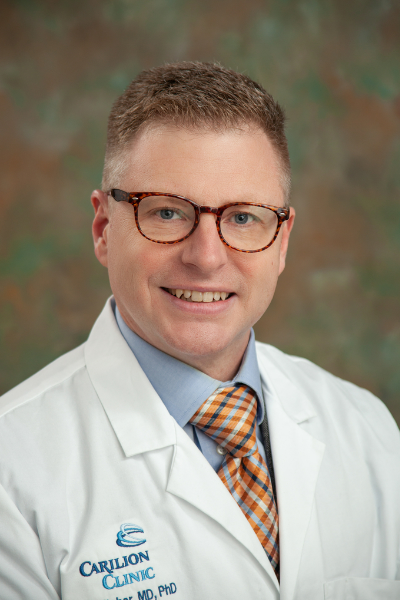
Mark Witcher M.D., Ph.D., completed his medical education and training with a focus in neuroscience, as well as neurosurgery residency and fellowship in functional neurosurgery. He was fortunate to train under mentors focused on translational neuroscience—integrating neurosurgical research into clinical neurosurgical practice—and Carilion Clinic Neurosurgery provides an incredible opportunity to continue the tradition.
Dr. Witcher specializes in helping patients with functional neurosurgical issues. He has dedicated many years to studying electrical signaling in the brain to better understand the neuron behaviors that cause tremors, seizures, movement disorders, pain, weakness, sensory symptoms and blackouts.
Contact Information
Jordan Darden, Ph.D.
Director of Neurosurgery Research