Imaging of High-Grade Gliomas
The purpose of this study is to determine whether off-label tracer PET/CT can provide additional or superior information in the diagnosis of recurrent high-grade gliomas compared to the current gold standard of MRI imaging.
About This Study
Summary
This study is evaluating whether a PET/CT scan using an off-label imaging tracer can provide additional or more accurate information than standard MRI for people with recurrent high-grade gliomas. The goal is to determine whether PET/CT can better distinguish between tumor recurrence and changes caused by previous treatment.
Participants will receive up to 3 doses of the study tracer in conjunction with MRI scans that are already part of their routine medical care. Researchers will compare the PET/CT and MRI images to evaluate how well each imaging method identifies changes in the tumor.
The results of this study may help improve the diagnosis and monitoring of recurrent high-grade gliomas and guide future treatment decisions.
To be included in this study, participants must be / have
- Written and voluntarily given informed consent
- Imaging evidence indicative of a newly diagnosed grade III or grade IV glioma
- Negative serum pregnancy test in female patients at childbearing age
To be included in this study, participants must not be / have
- Hepatic or renal dysfunction
- Patients who are judged by investigators as being ineligible for participation in the study
- Patients with a history of relevant drug hypersensitivity
- Patients who receive another investigational drug shortly before acquisition of consent
- Women who are pregnant or breastfeeding
For More About This Study or To Ask About Participation
Additional Information
Lead scientist at Carilion Clinic
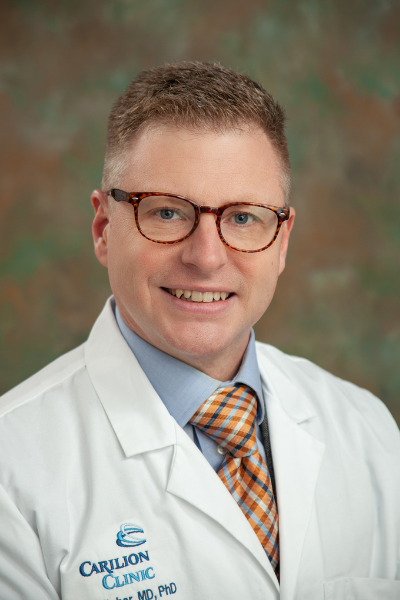
Mark Witcher MD, PhD, completed his medical education and training with a focus in neuroscience, as well as neurosurgery residency and fellowship in functional neurosurgery. He was fortunate to train under mentors focused on translational neuroscience—integrating neurosurgical research into clinical neurosurgical practice—and Carilion Clinic Neurosurgery provides an incredible opportunity to continue the tradition.
Dr. Witcher specializes in helping patients with functional neurosurgical issues. He has dedicated many years to studying electrical signaling in the brain to better understand the neuron behaviors that cause tremors, seizures, movement disorders, pain, weakness, sensory symptoms, and blackouts.