Patient Tissue Engineered System to Study Glioblastoma (GBM)
The purpose of this research is to study high-grade glioma cancer by making experimental cultures with tumor cells from 45 participants in conjunction with other normal brain cells rather than in isolation, and comparing the responses of the cultures to the patient’s outcome to determine if th...
About This Study
Summary
Most studies of glioblastoma (GBM), an aggressive type of brain cancer, have focused on tumor cells in isolation from the surrounding brain environment. This study uses a tumor microenvironment (TME) model that combines tumor cells with normal brain cells to better reflect how tumors behave in the body.
Participants undergoing surgery for GBM may choose to donate a small amount of tumor tissue that would otherwise be discarded. Researchers will use these samples to create personalized TME models and study how they respond to standard treatments. The results will then be compared with each participant's treatment outcomes.
The goal of this research is to determine whether the TME model can help predict how patients respond to treatment and support the development of more personalized therapies for glioblastoma in the future.
To be included in this study, participants must be / have
- Age 18-100
- Diagnosis of high-grade glioma or presumed high-grade glioma
- Undergoing surgical resection or biopsy of tumor
To be included in this study, participants must not be / have
- Age < 18
- Pregnant patients; standard of care pregnancy testing will be performed
For More About This Study or To Ask About Participation
Additional Information
Lead scientist at Carilion Clinic
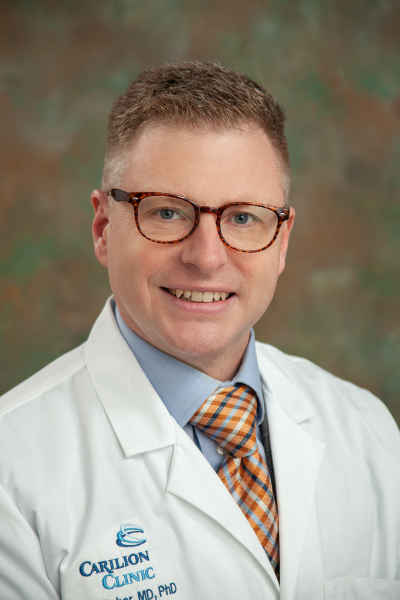
Mark Witcher MD, PhD, completed his medical education and training with a focus in neuroscience, as well as neurosurgery residency and fellowship in functional neurosurgery. He was fortunate to train under mentors focused on translational neuroscience—integrating neurosurgical research into clinical neurosurgical practice—and Carilion Clinic Neurosurgery provides an incredible opportunity to continue the tradition.
Dr. Witcher specializes in helping patients with functional neurosurgical issues. He has dedicated many years to studying electrical signaling in the brain to better understand the neuron behaviors that cause tremors, seizures, movement disorders, pain, weakness, sensory symptoms and blackouts.