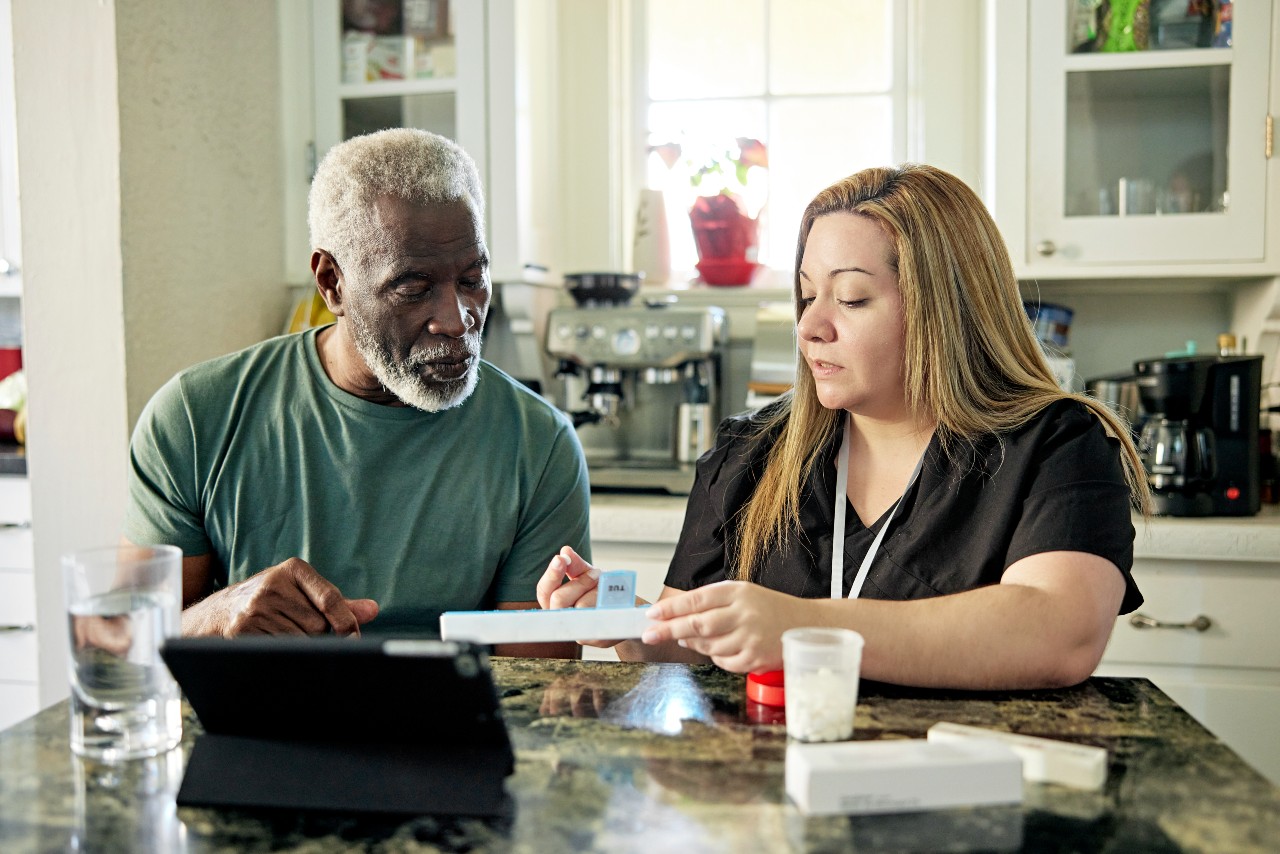
- The variety of patients served by Carilion Clinic Home Care
- The services and therapies patients can receive at home
- Information about how telehealth and remote care work for patients
Home health care is skilled care provided in a patient’s home by a Medicare-certified agency under a physician’s order. While many people imagine the typical home health patient as an elderly person, patients can be of any age and include:
- Pregnant women
- Newborns
- People recovering from surgery
- People managing chronic conditions
Working with patients in their home allows for more relevant discussions about their disease process, their medication and diet management, ways to prevent falls and learn safe handling techniques.
And in our region, where many patients are remote, Carilion Clinic complements its skilled nursing with telehealth remote monitoring, a phone-based device that allows patients to record blood pressure, weight and other measures to better manage their chronic diseases.
“Telehealth is a wonderful supplement to patients,” said Sarah Via Browning, RN, MSN, DNP, director of Systems Operations and Support for Carilion Clinic Home Care and Hospice. “Because they’re at home, they can learn the connection between sodium intake with soup and a higher blood pressure reading. And when they communicate that to the nurse who is monitoring their vital signs and measurements, they’re empowered to control their condition better.”
According to Medicare.gov, home health care is just as effective but usually less expensive and more convenient than hospital- or nursing-facility-based care.
Browning agrees.
“Working with patients in their homes allows us to see what their specific needs are,” she said. “And it gives them more opportunity to manage their condition better.”
How It Works
Patients who would benefit from home health are referred by their physician. The three qualifying disciplines for home health under Medicare are:
- Skilled nursing care
- Physical therapy
- Speech therapy
Supporting disciplines include occupational therapy, bath aides and social worker support.
Patients in most regions have a list of available home care agencies to choose from. Browning recommends that patients look into the quality ratings of available agencies before choosing.
The physician, home care team and patient work together to develop a care plan. This can involve a combination of the six disciplines based on the patient’s needs, as well as therapy goals and lifestyle changes.
The nurse or therapist then visits the patient’s home and assesses their physical condition, conducts an overall safety check, reviews the patient’s prescription and supplemental medications and discusses goals with the patient.
“Home care is designed to be a short-term, intermittent program,” said Browning. “The goal is to get people back on their feet. Patients with chronic disease are taught ways to recognize and manage their symptoms so as to improve their quality of life."
According to Browning, improving health literacy is the primary benefit of home care.
“Any education we can provide benefits the patient,” she said.
Find out more about telemedicine visits.