Stroke is one of the leading causes of death and disability in the U.S., according to the American Stroke Association. While risk increases with age, strokes can happen at any stage of life—including in people in their 20s, teens, and even children. In fact, more people under 50 are having strokes now than ever before.
What is a stroke?
A stroke happens when blood flow to part of the brain gets blocked, preventing brain tissue from getting oxygen and nutrients. Brain cells begin to die within minutes, making stroke a medical emergency.
There are 2 main types of stroke:
- Ischemic stroke: Caused by a blockage in a blood vessel supplying the brain
- Hemorrhagic stroke: Caused by bleeding in or around the brain
What increases your risk of stroke?
Everyone, no matter how old you are, should know their risk. You’re at higher risk of stroke if you:
- Have a family history of stroke
- Have certain inherited conditions like congenital heart disease or blood clotting disorders
New research has also found an increase in stroke risk among those who have migraines (especially with aura), endometriosis, or lupus. While those things are all out of your control, there are many risk factors you can control:
- Smoking or vaping
- High blood pressure
- High cholesterol
- Poor diet
- Lack of exercise
“The rise in strokes in younger people has a lot to do with not being active and skipping routine medical care,” explains Thomas Kodankandath, MD, neurologist at Carilion Clinic. “That can lead to the major risk factors like obesity, diabetes, high blood pressure, and high cholesterol.”
Take this stroke self-assessment to learn your risk.
How to lower your stroke risk
The good news? Up to 80% of strokes are preventable with healthy choices and regular checkups. No matter your age, you can lower your risk:
- Eat a balanced, healthy diet
- Quit smoking or vaping (there’s help available!)
- Know your blood pressure and keep it under control
- Get at least 20 minutes of exercise daily
- See your doctor for a yearly wellness visit
Know the signs of stroke
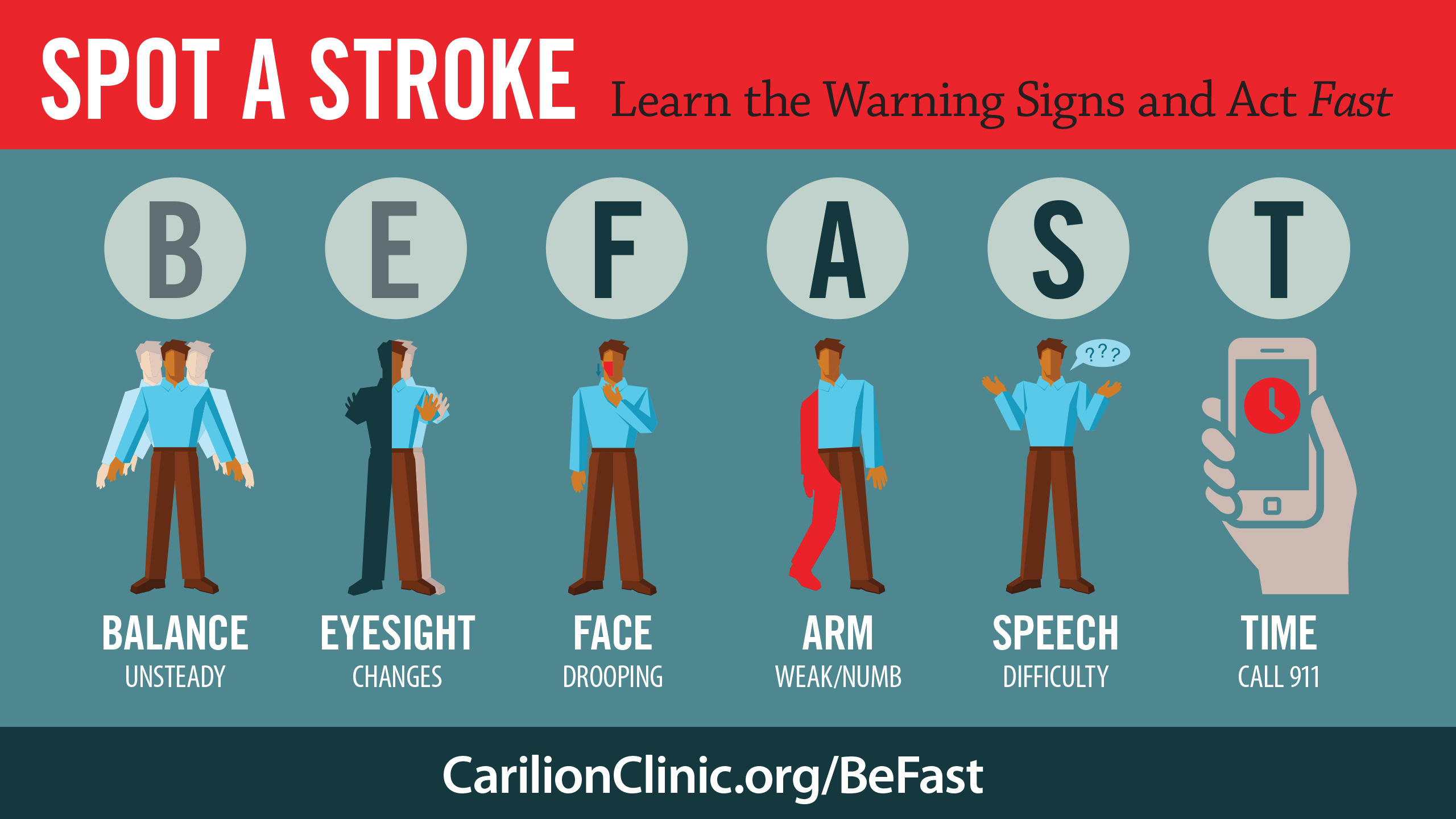
Faster care = better outcomes. No matter your age, don’t ignore stroke symptoms. Learn the BE FAST signs to act quickly:
Stroke in children
Signs in younger people can look slightly different, and may include:
- Sudden severe headache, especially with vomiting and sleepiness
- New onset of seizures, usually on one side of the body
- Sudden confusion, difficulty speaking, or understanding others
- Sudden trouble seeing in one or both eyes
- Sudden difficulty walking, dizziness, loss of balance or coordination
Quickly recognizing the signs and calling 911 is critical at any age. If you or someone nearby shows signs of stroke, call 911 right away. Fast action can save a life and improve recovery.