- Why moderate drinking isn't as harmless as once thought
- The ways prenatal exposure to alcohol can harm a fetus
- Resources that can help
Prenatal exposure to alcohol is the leading preventable cause of birth defects.
Even so, many people still believe that moderate drinking is harmless during pregnancy.
Carilion Clinic's Larry G. Dennis, M.D., a maternal fetal medicine specialist and professor at the Virginia Tech Carilion School of Medicine, says that most OB/GYNS in the U.S. have been telling their patients to avoid any alcohol during pregnancy for some time, but that pregnant women still see lot of conflicting information about it.
“You might have a friend who drank occasionally during pregnancy and the child was ok, so you think it will be ok for you too," he said, "but there are no studies that show that any level of alcohol is safe during pregnancy.”
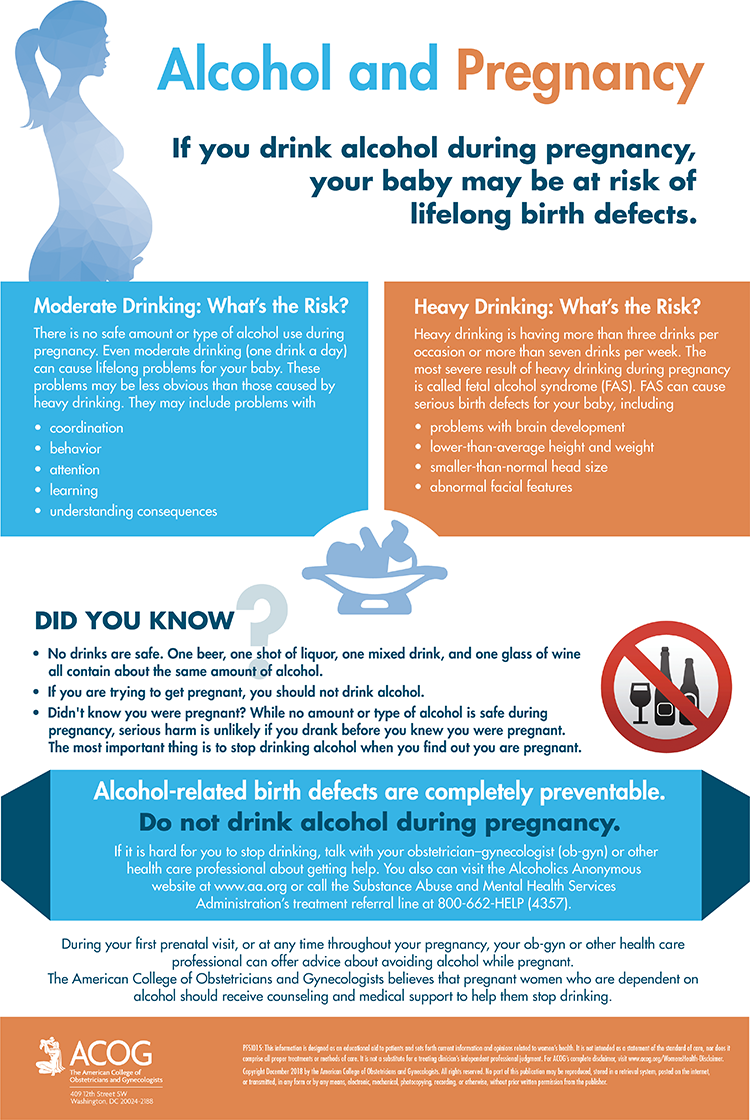
As shown in the infographic below, the American College of Obstetrics and Gynecology agrees.
The American Academy of Pediatrics agrees as well. Prenatal exposure to alcohol can damage the developing fetus and is the leading preventable cause of birth defects and intellectual and neurodevelopmental disabilities.
Dr. Dennis noted that these defects and developmental disabilities can lead to lifelong struggles with:
- Behavior
- Academic performance
- Language skills
- Attention
- Cognition
- Memory
- Visual and motor development
“No type of alcohol is safe to consume during pregnancy and there is no time during pregnancy that it is ok to drink,” Dr. Dennis explained. “Our recommendations are and have been for quite a while to not drink any alcohol during pregnancy."
"It is simply not healthy for your baby.”
He added that it's best to stop drinking once you plan to become pregnant and stop using contraception.
If you have questions about ensuring a healthy pregnancy, talk to your OB/GYN.