ARST2032
This study wants to compare failure free survival (FFS) of patients with very low-risk rhabdomyosarcoma (VLR-RMS) when treated with vincristine and dactinomycin and evaluate the FFS of low-risk rhabdomyosarcoma (LR-RMS) when treated with vincristine, dactinomycin, and cyclophosphamide.
Category
Age Requirement
About This Study
Summary
Rhabdomyosarcoma is a type of cancer that occurs in the soft tissues in the body. This phase III trial aims to maintain excellent outcomes in patients with very low-risk rhabdomyosarcoma (VLR-RMS) while decreasing the burden of therapy using treatment with 24 weeks of vincristine and dactinomycin (VA) and examines the use of centralized molecular risk stratification in the treatment of rhabdomyosarcoma. Another aim of the study is to find out how well patients with low-risk rhabdomyosarcoma (LR-RMS) respond to standard chemotherapy when patients with VLR-RMS and patients who have rhabdomyosarcoma with DNA mutations get separate treatment. Finally, this study examines the effect of therapy intensification in patients who have RMS cancer with DNA mutations to see if their outcomes can be improved.
Patients are assigned to 1 of 2 regimens based on clinical features. Patients with positive mutation status are transitioned to a third regimen, Regimen M.
- Arm VA (Very Low Risk): Patients with VLR-RMS receive vincristine intravenously (IV) on day 1 of each cycle and days 8 and 15 of cycles 1, 3, 5, and 7 and dactinomycin IV over 1 – 5 minutes or over 10 – 15 minutes on day 1 of each cycle. Treatment repeats every 21 days for 8 cycles in the absence of disease progression or unacceptable toxicity.
- Arm VAC/VA (Low Risk): Patients with LR-RMS receive vincristine IV on day 1 of each cycle and days 8 and 15 of cycles 1 – 3. Patients also receive dactinomycin IV over 1 – 5 minutes or 10 – 15 minutes and cyclophosphamide IV over 60 minutes on day 1 of each cycle. Treatment repeats every 21 days for 4 cycles in the absence of disease progression or unacceptable toxicity. Patients then receive vincristine IV on day 1 of each cycle and days 8 and 15 of cycles 5 – 7 and dactinomycin IV over 1 – 5 minutes or over 10 – 15 minutes on day 1 of each cycle. Treatment repeats every 21 days for 4 cycles in the absence of disease progression or unacceptable toxicity. Patients may also undergo radiation therapy at cycle 5.
- Arm M: Patients receive vincristine IV on day 1 of each cycle and days 8 and 15 of cycles 2 – 4, 7 – 8, and 11 – 12 and dactinomycin IV over 1 – 5 minutes or 10 – 15 minutes on day 1 of cycles 2 – 5 and 8 – 14. Patients also receive cyclophosphamide IV over 60 minutes on day 1 of each cycle. Treatment repeats every 21 days for 12 – 13 cycles in the absence of disease progression or unacceptable toxicity. Patients may also undergo radiation therapy at cycle 5.
To be included in ARST2032, participants must be / have
- All patients must be enrolled on APEC14B1 and consented to the Molecular Characterization Initiative (Part A) prior to enrollment and treatment on ARST2032.
- Patients must be 21 years or younger at the time of enrollment.
- Patients must have newly diagnosed embryonal rhabdomyosarcoma
- All patients will be evaluated for stage and clinical group. Note that clinical group designation assigned at the time of enrollment on study remains unchanged regardless of any second-look operation that may be performed.
- All patients and/or their parents or legal guardians must sign a written informed consent.
To be included in ARST2032, participants must not be / have
- Patients who have received prior chemotherapy and/or radiation therapy for cancer prior to enrollment. Surgical resection alone of previous cancer(s) is permitted.
- Patients who have received chemotherapy or radiation for non-malignant conditions (e.g., autoimmune diseases) are eligible. Patients must discontinue chemotherapy for non-malignant conditions prior to starting protocol therapy.
- Patients unable to undergo radiation therapy, if necessary, as specified in the protocol.
- Pregnant or breastfeeding females.
Keywords
Rhabdomyosarcoma
For More Information or To Ask About Participation
Additional Information
Lead scientist at Carilion Clinic
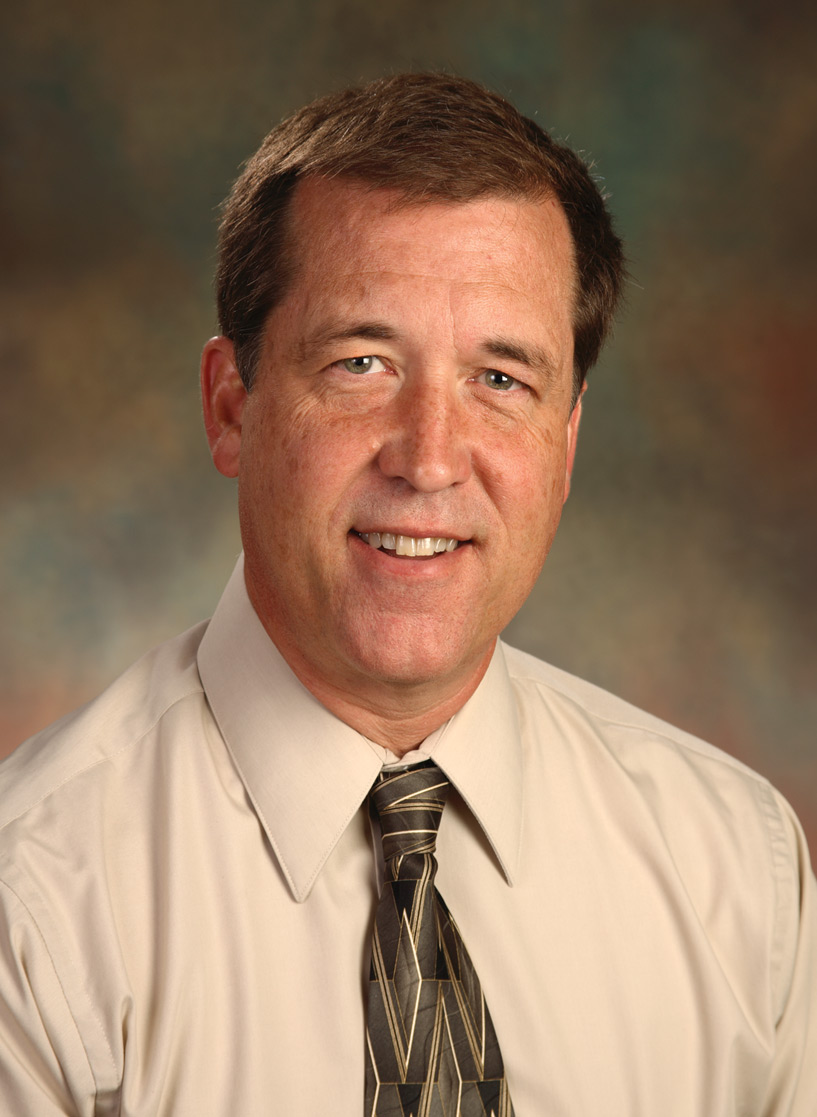
Glenn Edwards, MD, is the section chief of pediatric hematology/oncology, as well as the Children's Oncology Group's principal investigator for Carilion Clinic. With more than 30 years of clinical experience, he is board-certified by the American Board of Pediatrics in pediatrics and pediatric hematology/oncology. He completed his fellowship at Walter Reed Army Medical Center and completed his internship and residency at Tripler Army Medical Center.
Official title of study
A Prospective Phase 3 Study of Patients With Newly Diagnosed Very Low-Risk and Low-Risk Fusion Negative Rhabdomyosarcoma
Funding mechanism
Sponsored by Children's Oncology Group