
NRG-CC005
This trial examines colorectal cancer incidence in participants with 1 – 2 non-advanced adenomas randomized to surveillance colonoscopy at 10 years compared to participants randomized to surveillance colonoscopy at 5 and 10 years.
Category
Age Requirement
About This Study
Summary
Colorectal cancer (CRC) is the fourth most common cancer and the second leading cause of cancer death among men and women in the U.S. In the U.S., colonoscopy is the most utilized screening modality for CRC. Current clinical practice favoring colonoscopy-based screening with increased emphasis on detection of adenomas, most of which will turn out to be small, non-advanced adenomas, will greatly increase demand for utilization of surveillance colonoscopy exams in the coming decades. Yet, the evidence for determining the benefit, optimal timing, and recommended frequency of surveillance colonoscopy is unknown. A randomized, clinical trial to demonstrate the difference in yield between 5- or 10-year surveillance for participants with non-advanced adenoma is needed to guide clinical practice. Only a randomized trial will be authoritative enough to define good clinical practice and directly influence clinical care.
To be included in NRG-CC005, participants must be / have
- Participants ≥ 50 and < 70 years of age at the time of randomization.
- Participants with a first-time diagnosis of 1 – 2 non-advanced tubular adenomas (< 10 mm without tubulovillous or villous changes or high-grade or severe dysplasia) from the qualifying colonoscopy within 4 years prior to randomization
- Complete excision of all observed polyps in qualifying colonoscopy
To be included in NRG-CC005, participants must not be / have
- Prior history of colorectal cancer or colorectal adenomas including sessile serrated polyps/adenomas excluding those found on the qualifying colonoscopy.
- Previous malignancies unless the patient has been disease-free for 5 or more years prior to randomization and is deemed by the physician to be at low risk for recurrence. Patients with the following cancers are eligible if diagnosed and treated within the past 5 years: all in situ cancers and basal cell and squamous cell carcinoma of the skin.
- Known family history of CRC diagnosed at ≤ 60 years of age in a first degree relative (mother, father, child, sibling) or in 2 first degree relatives with CRC at any age.
- Inflammatory bowel disease (e.g., Crohn's Disease, ulcerative colitis).
Keywords
Colorectal cancer
For More Information or To Ask About Participation
Additional Information
Lead scientist at Carilion Clinic
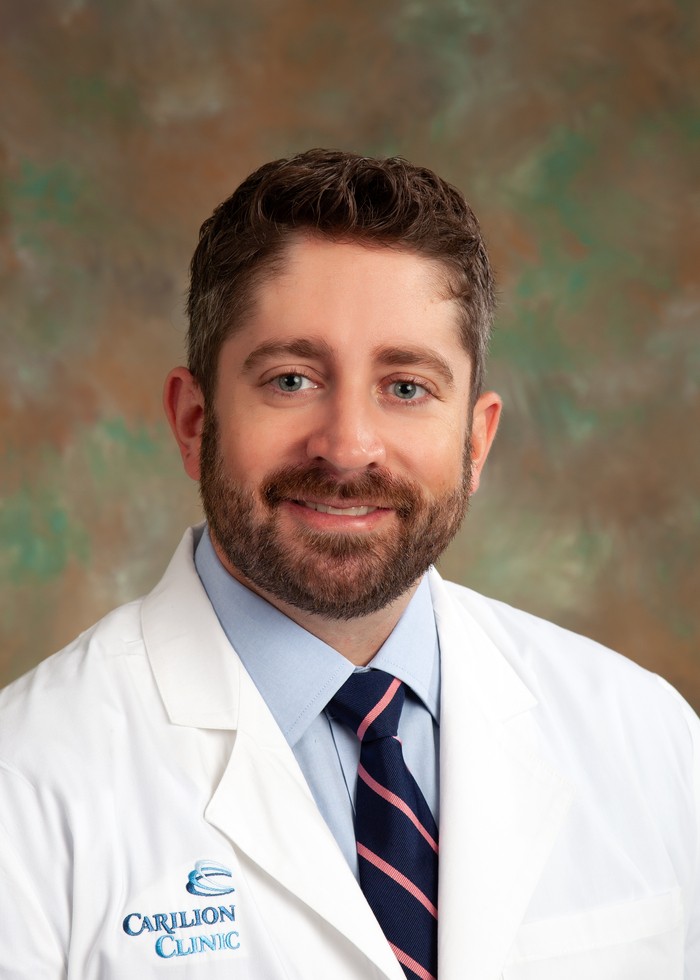
Dr. Terry Paul Nickerson is a board-certified colon and rectal surgeon. He completed his general surgery residency and colon and rectal surgery fellowship at Mayo Clinic in Rochester, Minnesota. After finishing his fellowship, Dr. Nickerson worked at MD Anderson Cancer Center, an NCI-designated Comprehensive Cancer Center in Houston, TX. In 2019, he joined the department of general surgery at Carilion Clinic as a colon and rectal surgeon. Dr. Nickerson is also an associate professor at Virginia Tech Carilion School of Medicine.
Official title of study
Five or Ten Year Colonoscopy for 1 – 2 Non-Advanced Adenomatous Polyps
Funding mechanism
Sponsored by NRG Oncology